“What a piece of work is a man!”

Go back

Your message has been sent

Warning
Warning
Warning
Warning

Warning.
ADSC_0299
An effective tool to counteract the onset of tedium induced by the interminable routine of work is to think of oneself as being an actor on stage. Ultimately it is all entertainment that is short-lived; this relieves one of the burden of taking oneself too seriously. Like life, the nature of work is full of contradictions. It is while doing what we loathe that we understand what we enjoy and even as we pursue what we love we encounter moments of dreariness where we hate the activity. Wittgenstein suggests that when we think we are exploring ideas we are really only exploring the language that represents the ideas. Since language, as the construction material of understanding, hovers between the negative and positive poles of binary opposites, we should not be surprised that life mirrors this perpetual tension.
Perhaps we have become addicted to pleasure and chase the ‘happy’ fix as a by-product of particular action or thought. Pleasure is not happiness and expecting life or work to offer a consistent flow of happiness is a fantasy, like trying to attain the never-ending orgasm. We need to experience the tension between loving and hating to settle into contentment where acceptance of both generates balance. The workplace offers us this tension in abundance and becomes the testing ground of our personal philosophies and belief systems. As emotional beings it is no wonder that we seek pleasure over pain. However, we are also rational beings and this is the space where we process the needs of our work and deliver the goods.
The industrial revolution introduced the era of technology, of systems and production that threatens to transform humankind into units of labour and consumption. It mechanized war and initiated medical breakthroughs which have contributed to increased longevity. Despite increased health and leisure time we appear to be more depressed than ever before. We hate work and in a manner befitting the twenty first century, are consuming our way to happiness with fanatical frenzy. Edwin Brock’s poem “Five ways to kill a man” remains an apt reflection of the human condition. In the poem he concludes that the simplest way to kill a man is “to see that he is living somewhere in the middle of the twentieth century, and leave him there.” The dehumanizing effect of the modern world is a central feature of our art and literature. It is why we still need to come to terms with the notion of work and its impact in our theatre of being.
The prospect of a lifetime of a daily routine to and from work terrified me as a young man and it induced a crisis of being in my early 20’s. The anticipation of being bound to a lifetime of tedium seemed like suicide by slow ordeal. Overcome with hopelessness and growing despair I began searching for meaning within the perpetual slog of repetitive daily routine. I discovered Camus, Leonard Cohen and resilience. My work, engaging young minds in a classroom was fulfilling, but beyond the classroom the rigid regulation bound world of school systems was an internal corrosive. I felt little more than a bureaucratic cog in an immense sausage machine tasked with churning out productive, law abiding citizens who would in turn feed the system ad nauseam.
An event in my first year of teaching illustrates my growing sense of isolation in the school system. Walking along a corridor I came across a year 12 student standing and facing the red brick wall outside a classroom. His nose nearly touched the wall. I suspected he was the subject of Calvinist rehabilitation (corporal punishment was regarded an essential aspect of education then). I paused and shuffled up next to him to stare at the wall,
“OK, I’m looking but I don’t get it?” I said.
“I left my homework at home.” He replied.
“And you hope to find it here?”
He chuckled, “ma’am (female teachers were addressed as ma’am) told me to stand here like this.”
“I suppose it’s better than being inside” I said. We both laughed, too loud. The classroom door opened and the diminutive but steely tyrant stared me down, sneered, sniffed dismissively and shut the door. In that instant I was no longer a colleague but a bumbling school boy. Embarrassed and confused by the situation and my own response, or lack thereof, I slunk away like a child.
It was a seminal moment that began to shape my attitude to work. I felt like a failed court jester and knew I could never expect the system to nurture or support me beyond the meagre salary it provided. Fulfilment at work would depend less on the work being done and more on my frame of mind while doing it. “I work for myself” became my mantra rules became a rough guide secondary to creativity and fun. I wanted to generate enthusiasm and curiosity and have students look forward to getting to class, as much for myself as for them. I admitted ignorance to my students, I could be honest and debates were commonplace; students were learning and I was having fun at work. Later that year we first year teachers were being lectured by a teaching veteran, “work at discipline, work hard and work will be easy…”his voice droned on but all I could hear was Hamlet sigh “words, words, words …”.
By Mike Scallan

Continental drift

The ‘Seismic Shuffle’ is a continental dance, it’s an old one and slow – at 2 cm a year one hardly feels one is moving. It’s not a dance we can choose to sit out,  it’s part of a package deal and  comes with no guarantees and limited warranties (eventually we all fall through the cracks anyway). But it packs a punch, cleaving a rock in two on Pangea around 200 million years ago it placed one half in the Alps and the other half in Africa. Continental drift, sounds like it should be a long, lazy Mediterranean cocktail. It belies the gargantuan forces at work beneath the surface. As surface dwellers we generally assume that surface is everything.
I understand continental drift. I have drifted. It’s a slow business, drifting to the invisible force -a “something there is” sort of push. The type that broke down the wall that Robert Frost spoke of mending. To drift is to surrender to the momentum of life. If one is fortunate enough to have control of one’s limbs it is easy to imagine that all movement is conscious, self directed. It is pleasing to oneself to think ‘I did this” or “I did that”. We are  however, carried along by our lives and imagine that the small choices we make direct it, maybe they do? However, I suspect more significant than direction is being ‘there’ when you’re there, whether you’re moving or not.

Ultimately everything moves: the continents, the planet, the solar system, galaxies and the perhaps the cosmos moves too. Movement is no big deal, everyone moves in one way or another, even when we’re not. Can we extract from this the axiom that movement has value?  I stir this cup of tea, ergo I control the direction of my life. Movement is arbitrary and movement is change. One step forward, two back – It’s like waltzing with entropy. I am, therefore I move. Once removed, I was. Therefore, I like to move it, move it …


dsc_0634.jpg

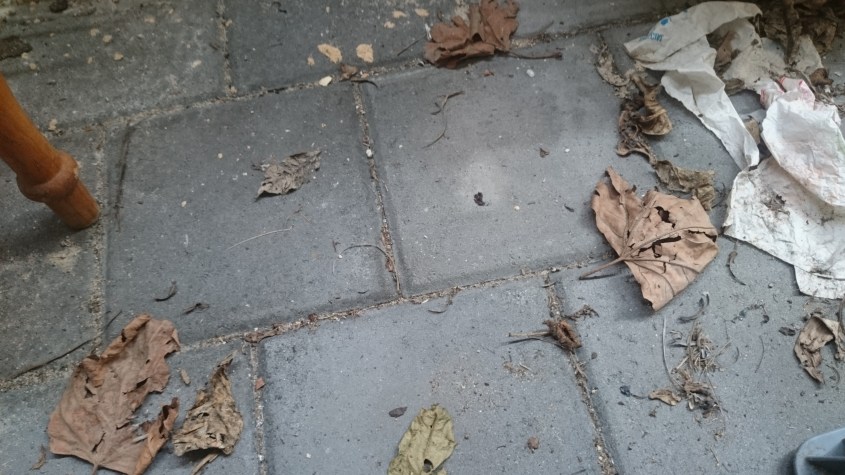
Dry and cracked mud close to where the bus parks, c.2016 or artist’s impression of Pangea (not to scale).

The Coolgaardie Gallahs

I saw a Magpie Lark doing this strange thing. It was walking around in small circles at the base of a tree with its beak in the soil. I was sitting in my car and this was in a car park with a row of those municipal trees that look like they’re dying, tied with thick rubber bands to a pole on either side of the tree. They make the tree look like its been stuck there as a punishment. The Lark stopped a few times and looked me straight in the eyes and carried on. They’re gutsy little fellas, fraida nothing. Then I saw it peck at something and swallow. Ants maybe. Once I saw a flock of pink Gallahs circling overhead and it looked at first like they were chasing a long necked bird, maybe an Egret or perhaps a duck. Not sure, had a long neck. Then they turned and the long necked bird followed so they weren’t chasing it. It was a clear day and the sun was still high in the sky cos as I followed them I looked into the sun and nearly blinded myself. I watched for several minutes and they were flying together, not at each other. Maybe the long necked bird thought it was a Gallah? Maybe they thought they were Egrets or ducks or whatever. Maybe they don’t think. It was strange cos usually animals don’t seem to mix like that, or play like that. Or maybe I just don’t get out much. It felt good to watch, made me feel hopeful. Next day we were in Kalgoorlie, in the town centre near that absurd little statue of the kid, Saint Barbara the patron saint of miners, with the story written on plaques on stones in a circle around it and there were these two women shouting and swearing at each other and I was eating a pie for lunch but straight away I lost my appetite. I felt bad for them, for everyone and wondered if it was cos I was raised Catholic or me just being crazy or if everyone felt the same. Truth is I watched some of the people watching and some of them were smiling and that disturbed me more than the shouting and swearing. One night after supper we were walking down the main street and there were all of these homeless blokes setting up for the night in the doorways of shops probably to get out of the draught that comes through town and is probably cold. They all asked us for money and the first time I gave a bloke the coins I had in my pocket then he asked for a cigarette so I gave him a couple and then next time I just ignored the bloke and carried on walking and felt bad for doing that. All the way back to the hotel I was involved in this internal dialogue and justifying why I never stopped each time and again wondered if all people passing someone homeless feel this way. Guilty for not helping every time and is giving cigarettes helping? Engagement with people is exhausting. Whatever you do and wherever you go there’s always this post-mortem of events and thoughts and shoulda, coulda, woulda and makes me just want to never come into contact with people ever again and reminds me why I enjoyed watching the Gallahs and the egret or duck and the Magpie Lark.

Before this, before we even got to Kalgoorlie we passed through Coolgardie and maybe that was where we saw the Gallahs, I can’t remember and does it really matter where they were cos they were in the sky as we watched. But, as you enter the town there’s this little house on your left that you can’t miss cos it looks like someone’s spent forever turning a refuse tip into a work of art. It’s all rubbish composed and arranged in such a way that you have to stop and if you don’t you wish you did and spend the next five kilometres thinking maybe if you turn back it won’t be too late, then don’t, then it is. But all around this house there is the strangest collection of everyday objects: hub caps, safety helmets, pots, cups, plates, baths, lengths of pipe … It’s like an alien landed and began gathering anything related to human daily life and left before he could do whatever he was going to do with them. Strange how everyday objects just piled up feels strange when that’s what we do anyway, collect and stockpile stuff. The mystery of the place lingers cos there’s no indication of what it is or why and I guess locals could tell a few stories and it was probably just some eccentric person who after losing their job or partner started this project to keep busy and maybe before the person died it looked better than it does now. There’s a visible history of someone’s life here and I would’ve liked to talk to that person cos they woulda been interesting and I reckon they would’ve been grumpy as hell or friendly and all smiles. It was after that we saw the Gallahs and the Egret or duck. After leaving the house I felt sad that we were just walking through someone’s life work. What was he thinking? I got the sense of a him from all the car stuff but girls can like cars too I guess but whoever it was I felt how full their hearts must have been as their hands placed each object here. Now it’s only stuff, or is it? I see stuff all the time but with this stuff my first thoughts were of the person behind it. So, no, it’s never ‘just’ stuff. Things are crutches for life in a world where everything’s always falling down or apart or both. We prop up our hearts with stuff, the sorta crap that helps bring meaning to the absurdity of existence and if the stuff looks crazy, why shouldn’t it? and in our ordinary ways we are all a bit crazy like Gallahs and Magpie Lark’s. He was a brave fella the bloke who lived in this house. I reckon he was brave cos he was honest and generally, we don’t like honest, we like to think we’re better than we are.

img-20151224-wa0001.jpg

Photos by William Venters

Birthing a shadow

I’m birthing a shadow; pushing out a form from within, and

glad to have it out –

to end years of kicking and

pushing and peristalsis in my brain, my

birth canal.

But now, i am shaped around the form that is gone,

the thing got the best of me.

left me squatting over a puddle

where my soul once was.

What did you do there? God will ask me.

I shall say I leaked.

working with air

I wish to unfold myself.

Spread out the contents of my head to better see

what’s in there where

nineteen thousand and ninety days

give momentum to my stride


across the blasted heath


Yesterday a sunrise was beginning there I swear.

I recall a thought, I think …

I forget – what,

what thoughts I have formed,

what forms the worlds I created took,
from which form I framed this version of what I have been?

am?

I remember much, but little of my being,

of time bleached days now

soft stains on the snaking matter of brain i strain

to know If I  turned out ok in the end.


I’m unfolding myself now

I’m air.

I work with air.


MJ Scallan

dsc_0588_2.jpg


A meditation on Death

wpid-20150913_101016.jpg

Every town dweller maintains an oasis. A patch of grass, green plants; a garden. This is an unconscious ritual of hope. There is a desert a few hundred kilometres away to the East. The sea is 5 kilometres away to the west. Brutal summer heat sucks everything dry and twice a week, we fight back with water. It is an endless cycle. It is an apt metaphor for the short lives we live on a fast moving rock that turns on itself whilst circling a star that is dying a slow and glorious death.

We love and, if we are lucky, are loved back. A welcome parenthesis in the absurd text of our lives, If we are fortunate, is the gift of children. If they remain happy and healthy then we are doubly blessed. At some point the people we love begin to die and the grief caused by their leaving either draws us closer to the faith of our choice or illuminates the absurdity of the condition of being alive. Perhaps both? I live in a constant state of mourning. Acutely aware of the imminent demise of everyone, I feel in all moments the loss of those with whom I am walking on the beach, for whom I make a cup of tea, with whom I look up at the sky and draw from the stacks of cumulus some shape or face or meaning. I live with the pain of loss even when nothing is lost. I anticipate pain the way swallows anticipate rain. There is a joy and a heavy grief in seeing the quick dives and low sweeps of these delicate birds. Some are drawn to the sea whose constant rows of falling froth laugh at the littleness of our human fear of endings. I am all endings says the sea. I end all of the time and look at me, see how large I am and with what force I end. Then our own ending seems alright and even normal, usual.

wpid-wp-1426734135092.jpeg

Against the violent current of nihilism I water the grass, the plants or dig a hole and place into it something alive in the hope that it will grow after I am dead. Hope is difficult. Putting a foot onto the floor and then the other is sometimes the most positivity I can bring to a day. Yet, I do not consider myself a negative person. Beyond the front door I am all smiles and mischief. The ones I love bare the brunt of my contradictory nature. My home is the birthplace of my being and I am not yet fully formed. It is here that I may express my disgust at the absurdity of human existence. Here that I hate people and love my dogs; despise the world and love my wife and children. I will love and hate with passion. I empty the glass of my being so that I am able to go out into my classroom and teach empathy and compassion. I can do this because I need it most and because I hate my self at times and people and the condition of life does not mean that I hate my self or life or the condition of being alive.

I am establishing limits. I will no longer entertain the simple minded. Those who elevate dogma of any brand above simple humanity. I cannot entertain such nihilistic stupidity. My brand of nihilism is entirely different. I marvel at the infinite dance of atoms whose rhythm gave rise to me. I am in awe of night skies and ants and feel the cosmos reshuffle itself in the dying twitches of a bee on a windowsill. I am grateful, to the deepest recess of consciousness, for my life and the ones in it that I love. I am also mindful of the incessant grief that marks the boundary of my existence. I will not accept this without some act of rage. Doesn’t my rage against the absurdity of life confirm my deep attachment to it? I find living to be a precious and beautiful event. I am just pissed off at a very deep level that it must end. If one’s finger bleeds at finding a thorn on the stem of a rose, one does not assume the rose hates you. The pain is an anomaly I am still attempting to understand.

I was entranced by a bullfight I watched in Madrid one Sunday afternoon at Easter. It was a manifestation of my conflicted being; the personality of soul on display. Ten minutes is all it takes to represent life. Our wilful pride swells as we swagger boldly and well dressed into the world silently crying out “look at me, look at me! Am I not the finest thing that ever lived? Am I not splendid? There in the prime of our lovely and beautiful naiveté we say to ourselves ‘but this is easy. Why did our parents and their old friends warn us about life? It is not hard at all. It is marvellously simple and I am so grand.’ Then from nowhere a bull is unleashed and it is not just there it is heaving and powerful and wants to dig its horns into you. My God, something wants me dead! How can that be? I am too pretty and young and wonderful to die? Then there is the battle and this beast that is as beautiful as you must die, or you will die. Life becomes in a moment not the style of your walk or the angle of your smile at admirers; it is simply that if you do not choose an action you will die. Something always dies at the end of it. At least once it will be you. Until then we must learn to not be so arrogant, to understand that everyone is beautiful and that everyone has their bull.

IMG_2622
By Mike Scallan

Suburban Blues


Suburbia is the purgatory of modern development. It is neither nature nor city but straddles the space between. Here, people are frenzied shoppers   but are also desperate to escape the compulsion to consume. Once people lived in harmony with nature. Seasons guided our notion of time, objects were made and ownership was a foreign concept. It’s a life I romantically imagine I live when I trek through or camp in isolated places where there are more trees than people. Now we own stuff or pursue stuff and are surrounded by busy people constructing, selling, buying or breaking. There are trees in suburbia but it is very peopled, busy and seems to lack something, or so I thought.

wpid-dsc_0768.jpg

My life is surrounded by objects which constantly threaten to own me. Maybe they do? They hold memories of my life in the way the landscape holds the lives of people living on it. I do not live on ‘the’ land. I live on a square of mortgaged real estate. I have made my peace with that. I respect it by caring for it. I bring beauty into it. I plant flowers, fruit trees and bottle my own olives. Inside my many walled dwelling I place objects that I have purchased. This is my ritual. I may not feel a cool breeze around an evening fire or wake up damp to birdsong, but if you look carefully it’s a rich place. Suburbia suggests the universal trend towards bland sameness, a middle class lego land. It’s more than that. It’s the space on this earth  where I live my life, find meaning and  constantly re-imagine existence.

wpid-img_20150122_142436.jpg

Here is a part of a shadow cast by one of the objects of my life. But this steel chair doesn’t cast shadows here anymore, or anywhere else now because I threw it out. I rebelled against the voice of my father which has always gently cautioned me to never ‘throw away’. I shut my ears, my heart and shouldered my way through the memories imbedded in the rusty seat. Where the rust had swollen the joins I bent the chair in half and tossed it away. There were waves of guilt as I surrendered to the consumer mind – “I will buy another, a newer and better chair”. Then I did. It was easy. It was difficult. Nostalgia bit at me as yet another object that had migrated 6000km with me gave in and got chucked like it was just a thing-which it is, was.

The white wrought iron chair was a part of a set of three objects: A table and two chairs. Meals were had around it where we encountered some of the best words we had to offer each other. The salted coastal air eroded the table first, then the chairs. They went from holding us to the rubbish dump too quickly.

20140324_081613

I must avoid being too bleak. Hope must be maintained. A life endured, even enjoyed, has a duty to look beyond current erosion. We must point our children to new experiences, to look beyond the rubble that gathers around a life. We all crumble,to varying degrees. Consumerism has its place, but objects carry history. We simply carry on.

Now we have two new chairs beside a table made of steel to endure the coastal air. I’m still not sure of the difference between steel and iron, I did once but I forget and maybe it’s not important. One kind lasts longer but neither lasts long enough. I wonder if whoever throws these out will at least pause before discarding them?

Meanwhile, new experiences open like blooms and a fresh beginning unfolds in suburbia. Ultimately, what will remain here? The trees I planted, some plants I grew from seedlings, a few paving blocks perhaps?  Maybe not? Suburbia is a battlefield between relentless, brutal  progress on the one hand and the lives of people held in fragile ceramic pots and weathered patio sets on the other. Thankfully the beauty of nature is there as well, if you look for it. Like us, it’s just somewhat contained.

wpid-20150913_100942.jpg

By Mike Scallan

2015 in review

The WordPress.com stats helper monkeys prepared a 2015 annual report for this blog.

Here’s an excerpt:

A San Francisco cable car holds 60 people. This blog was viewed about 1,100 times in 2015. If it were a cable car, it would take about 18 trips to carry that many people.

Click here to see the complete report.

Ode to a moth

Ode to a moth

Quiet as brick and effortless as breath you slipped your soft form and went, leaving just this delicate presence that rocks a little from my own exhilation.

Did you suffer? Do moths suffer as people do? Was your leaving as tranquil as your slack wings suggest? We’re not all that different you know, our species. Yours and mine both seek out light and finally settle unnoticed in the shadows. Here, looking at you on this ledge, in this public toilet, your mausoleum, I offer a few minutes of silence. Dead quiet. Did you try to enter this light bulb? Did moths live longer before electricity? Chasing the sun is easier than gate-crashing closer light. It takes longest to see what is closest to you.

I’m not in the habit of talking to dead insects, that would be absurd. Perhaps whenever we talk into an absence, we are really just talking to ourselves and maybe real people we knew who are now also on the edge of our memories, our world. Death reminds us that life existed where it no longer does. A brutal irony.

It is the brevity of life that gives it some worth but also bridles the heart with such unbearable pain. Maybe that is why I’m having this conversation with you? If I cannot pause for you, what will I stop for? If the stuff that once bound us, life, goes out of something little, surely it’s as sad as when it leaves the larger among us? My life is as little as yours in the context of the world. We may even be brothers? There is vast chasm between your world and mine. There is language for one thing, I do not know yours. But, whatever the differences my friend, we depended on air together. The only real difference is that I still breathe and you are simply still.

wpid-wp-1444829010425.jpg

I own therefore I am

I am on my way home, in my car, listening to my radio, I stop at our beach. We call it ours, this stretch of sand on this continent that is now my home. My country, this is how I refer to the 7,682,300.0 square kilometres beneath my feet. I have a passport which confirms my citizenship of the state. It is navy, embossed in gold, official looking. The cover is bendable but thick. It will not easily be damaged from frequent use. It holds the allure of adventure. This is how the institution of state draws us in and places the spell of attachment on us. “With us you may travel freely, ” it seems to say, “you are not the citizen of the world you imagined you were. You are not as free as you thought you were. This book marks that you are owned. We call this state of being owned ‘citizenship’.”  

It contains, inside, a black and white photograph of me, unsmiling. One is not encouraged to smile for official photographs. So here I am in my country seriously wishing to understand how I assume that so much is mine. I have even purchased a piece of land with a house on it and that I call mine but really, it is the bank that has deemed me fit to speak of it thus. I earn a salary, paid fortnightly. Most of this goes to the bank so that I can one day, decades from now, call the house truthfully, mine. Strange isn’t it? To speak of it seems strange, this suburban ritual of possession. I am told that it was not always so. I have read articles by clever men on the history of ownership and possession and it would appear that Indigenous people worldwide never considered themselves owners of land. My mate Matt, a Noongar man, once laughed off the notion of buying a home. “Why would I buy dirt cobber?” he asked me. Indeed, why?

wpid-img_20151024_185116.jpg

It seems to be a distinctly European invention, this idea that ownership begets identity. We assume it has always been so, genetic even, like violence. Seems we have been wrong about many things. They really started something those restless fifteenth century Spaniards and Portuguese. Further back the Goths, the Vandals, the Huns, the Persians, the Greeks, the Romans and the Vikings caught it; this contagion of land-greed. Their desire to possess was passed on to the English, the Germans, the Belgians, the French, the Dutch and the Italians. What formed their view of the world? Why did they think a first meeting ought to be followed by the planting of their flags, declarations of ownership and brutal oppression? It’s a fundamentally flawed human practice that we continue to emulate 500 years later.

Where does this language of ownership came from? How did it come to be the mode of my tongue, my mind? The pronoun ‘mine’ is one of a child’s earliest words. It defines the boundaries of their existence: ‘my nose’, ‘my mummy’, ‘my house ‘. What does it mean to ‘have‘? How do I ‘have’ this home, ‘have’ this toothache, ‘have’ this bruise, ‘have’ these thoughts? In the marriage union I get to ‘have’ and to ‘hold’. I have a great deal, but when was I bestowed ownership of ‘my’ character? Who is this ‘me’ I speak of?

wpid-dsc_0597.jpg

Studies of human society suggest that one of the prime forces in our history is ownership. We have evolved through ownership. From feudalism to mass consumerism we have organised our social structures around competition for land and artefacts. We call land ‘real estate’. It forms our reality. Being landless thus presents itself as a an ‘unreal’ condition, an undesirable state of being. Material poverty is perhaps more an indictment on our modern tendency to insulate ourselves with our possessions. Poverty represents the way we think about the world, not a way of the world. It is perhaps more a consquence than a condition. It is a word denoting what one does not have. A street vendor in Mumbai, India told me there was no poverty in India. I did not understand what he meant. It appeared self-evident to me that poverty was not only real but rampant as well. I’m beginning to realise what he meant. I’m seeing more of it living in the first world.

wp-1449482047629.jpg

letter for mother

Mother
Mother

The last time we spoke I struggled to understand your words. A day later you were moved to ICU and two days later you died. But there were other, more important words that passed between us. We spoke often and for that I am grateful. There is a sense of closure in the love we knew we had for each other. I feel remorse at being over 6000km away when you were folding your life away. I wish I could have been there to hold your hand, just once. Sean did that for both of us. I know you would remind me that geography does not alter the state of the soul, that you knew we loved you dearly. We did, do. Now I experience the real cost of migration. You made our leaving easier by supporting it. You were brave that way. I also know it played its part in breaking your heart. What a big heart you had.

DSC_0343

I shall visit Sean in April and together we will with care and all the gentleness we can muster, trace your life in the belongings you left behind. There will be letters we wrote to you as children, hand made gifts from your granchildren … you kept everything. Archeology of the soul. Memories will re-establish your beautiful presence and we will cry. We will encounter your absence in every room of the home. We will embrace your presence which is now only found inside of us. It seems darker and roomier inside, colder. I will feed your birds and water your plants and talk to you. We will laugh. In the laughter we will recall one of the finest gifts you ever gave your sons, the ability to find in the bleakest hour of the day a reason to smile.

FB_IMG_1423115534635

This was meant to be a letter of thanks and goodbye, some sort of eulogy shared. Like our lives it is imperfect, a poor mirror of the vast emptiness your leaving has left. The words do not express my heart, they never do. At best, all they can do is point towards someone they are trying to embrace and whisper the words one last time, ‘I love you mom’.

DSC_0127

p.s. Happy birthday 🙂

Learning not to fly

image

It is the swift overhead passing of a seagull which suggests to me that my fascination with flight is not that I yearn to fly but that I wish to escape completely my inner demons. My fallen angels of idealism. My automated days of work, of incessant calculations of the infinite responses to the interminable thread of responsibilities that seem to govern my existence.
I realise that the moments of peace I chase after are forever just moments. I will never stretch them out to anything more than a moment. The most I can hope for is a more expansive heart so that these moments fill up more of the empty space inside me.

The desire to fly is the breath of weariness. It is the tired exhalation that leaves my body as I understand that I am living the life I have, not the one I imagined I would live. In that life I am wiser,  writing text widely read, creating art with words and paint and clay. And people buy my work which allows me to do it again and again.
However with this understanding there is also,for the first time perhaps, the knowing that the life I have could not be better for it contains the people I love. And love is more important than words or paint or clay. The real art of my life has been surviving my mistakes.

image

Besides, relieved of the ghastly responsibility of having to create art,  I can write without hindrance,  with honesty. I can experience days of trudge knowing that most people feel the same way. I can drag myself to work and once there realise I actually enjoy it. I can, like everyone else, hanker after freedom from  responsibility. And yet, it is that same responsibility that allows me to look up at a seagull and see its beauty.

I imagine there must be at least one seagull out there who looks down and imagines how fine it would be to walk every day on the earth.

wpid-img_20150122_141733.jpg

Posted from WordPress for Android

A mind in iron

Here is the great mystery of life: it ends.

So there I was …  am? I have no memory of my origin, only of being and it seems that I have always been. I feel that I have been here forever. Certainly, I am not as I was before, or will be. The ‘I’ who speaks now feels infinitely connected with everything that was here, is here or will be here. Something galvanises me to pronounce that this has always been the case. Still, there is a morbid tendency under current circumstances to contemplate ‘not’ being. This is unsettling. It is contrary to the nature of existence. It is traumatic and I fear this only hastens corrosion. I cannot fathom that in the course of my existence change has been so brutal, so sudden and yet always anticipated. I am all contradiction now. Resigned and angry, holding on and letting go. Time confounds the mind. A degree of material degeneration is expected, annihilation is altogether another matter. Consciousness feels ageless, an elegant sensitivity held hostage by imperfect design; a rotten receptacle. In every sense it is a degrading process. Before this moment, yesterday or last year or thirty years ago I was different. I am not sure when ‘before’ is or was? What has changed?

wpid-dsc_0787_1.jpg

There has been some … rearrangement, shall we say. When does one begin to speak of oneself in the past tense? Memory is a wicked joke. Once I was not as decayed as I appear to you now. My clean lines sliced land and sky with cold precision. Sharp angles framed vast sections of smooth steel that were caressed in places to a polish where men stood, clung as they worked, held as they smoked. Rust began slowly. It settled at first as a warm patina of benign dust that at first light cast a hazy aura of smoked auburn on my form. Beautiful but deathly, subtle as smoke. Then this. Jagged edges, broken frame, an eroding core. It crept out from the inside, was it always there? I was solid. I felt solid. I passed through decades, almost a century. I never considered time a real player in my narrative. Was I arrogant?

wpid-img_20150716_132408.jpg

Here is the surprise. I never noticed the decay until it seemed, without warning, to be everywhere. I was forever new and then I was in a heap. There were people everywhere then. Busy, busy. I was the centre of that activity.

Science softens the blow. It calls this the conservation of energy. I am undergoing my final conversion, becoming increasingly transformed. This conversion has the sense of displacement. It is a difficult conversation. So, the atoms which constitute my awareness, my consciousness … where do they go? Does it  all go back into the earth? Is this why on quiet days as the wind blows over me, I can almost feel it speak to me? In the earth around me are the voices of the previously converted; the displaced, the more thoroughly eroded ones. We should, if it is our mode, walk more gently on the ground. We are treading on those gone before us. I should have anticipated this. I did. What does one do with the knowledge that you will end? Anticipation is futile. The end comes anyway.

wpid-img_20150716_131921.jpg

Against the nihilistic current of our existence we can only do what we have always done, stand fast. Stand until we fall. Then we hope for a soft landing, perhaps an acknowledgement of our having been here at all. Even that is a vanity; new things will be built, or not. Expecting Remembrance is a vanity. Memory evades the young but takes hold for a time on the near falling ones. When I finally crumble, I hope I remember to laugh at the absurdity of the rising and falling that is existence.

wpid-img_20150716_130724.jpg


Sisyphus writes back

Sisyphus writes back

image

Four centuries pass too slowly for rock heaving rogues,
for God’s sentries failed to tell Him a man caste out has will,
so deaf to me He held in flux what deftly moves us still,
the motion of the seas, the sun, the cycle of moths

Tormented toil has taught me this-
grants these words a force;
a gravitas, a mind that sees and now shall call it thus-
I move boulders, God moves stars;
my pebbles roll, his planets swing; mine in hell and his up there …
Amen.

My grave waits; His lies cold.

I blister heaven with my prayers; grow callouses on my heart,
Pushing a rock on a rock, the eternal sickly cycle,
sickle minded we tread our rut,
we carry on, we’re carrion
Samsara has us beaten,

I, Sisyphus am done.

By Michael Scallan

The history of the world

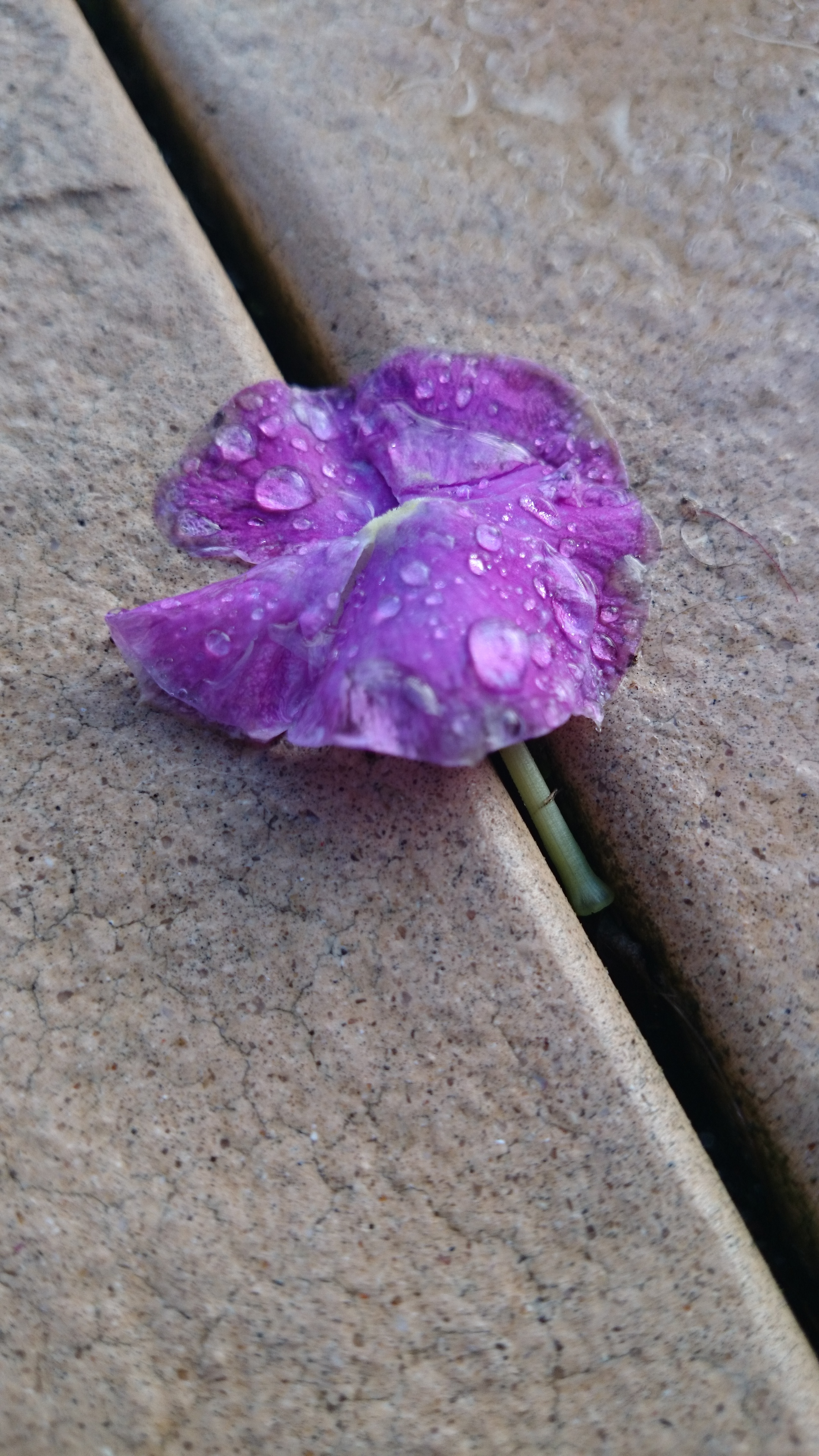
Blooms fall,
People fall,
Falling is death,
People are flowers.

I

image

Posted from WordPress for Android