A history of the world in less than 10 minutes 

In the beginning there was man and the soil. In some places, notwithstanding occasional conflict, most people got on with the task of surviving together on the soil. In other places man toiled and the stronger among them claimed ownership of the soil.  Why in some places men claimed ownership and in other places only membership is a question for the ages. One man got clever and made a plough. For the machine to be effective he bought a horse and so the horse trader liked this machine. Soon everyone had a machine and a horse. Those who could afford neither machine nor horse nor land worked for those who could. Ownership determined wealth; it’s not rocket science. Where people did not own things it was different. They did not have a word for wealth.

Later the machine was improved, older ones sold or melted down to make newer, better machines. Some men left the land to make and sell machines. Other machines appeared to cut wheat, mill corn, spin yarn and weave cloth. This made some people glad and others who could not afford machines became angry. Those who had land and horses and machines became wealthier and more powerful and eventually owned all the land. Those who did not own land or machines were greater in number and worked for the powerful men. Amongst them all, powerful and powerless, there were good and bad men. In some places men were valued for their contribution to those around them, in other places a man’s position in relation to those in power determined his value.

Not all people thought of a man in terms of value but where there were machines, it seemed like the right thing to do, even logical. Machines made life easier, those who made and improved them were highly regarded. It’s not rocket science. It seemed to be the natural progression of things and people did not ask whether it could or should be otherwise, “Thus is the world” people said and as it was said, so it became true. If God had wanted it otherwise , he would have made it so. In the places without machines people said pretty much the same thing.

There were some places where people felt it was silly to claim ownership of land since they all lived off the land and the land had been there long before them. Land to them was not something you owned but a place where you lived. People belonged to the land. They respected the land and the animals and also every person’s place on the land. They did not make machines because they never wanted more, only enough.

Over time the machines got bigger and better and from out of the soil men dug old dead trees and burned them to power the machines. They called this fuel. Fuel begat steam which begat bigger machines which begat trains and boats. Men saw the value of land and powerful men trained soldiers to conquer other lands and put soldiers in boats to conquer them. Machines harnessed great forces. Force became the way of the world. The places without machines were easy to conquer. Where soldiers found people without machines they claimed ownership of these simpler people. The powerful, machined men thanked God for giving them the machines and assumed that those men without machines could not possibly have God so they gave them their God and killed any who refused to accept their gift. How could anyone who refused such a gift ever be trusted? It’s not rocket science.

By now there were many powerful men and fewer places with dead tree fuel so these men went to war and fought each other for control of the land. They did this for many hundreds of years. During the course of these wars the places these powerful men owned became clearly defined by boundaries and they called their allotted parts countries. To differentiate them from one another they took coloured cloth and wove these into flags, which they waved and they said that these signified their loyalty to their country. They said that those who lived together within their well-defined boundaries were different to other men with different cloths. Difference became more important than being alive. It was no longer sufficient to be alive. You had to live differently so that maintaining difference kept you too busy to ask questions like aren’t we actually the same?

And so the men of power wrote down what they had they said and it was believed because everyone knows that when something is written it must be true and if powerful men write it, it is so true we call it law.

Each country became peopled. Still, there were those who were powerful and those who were not. Those who were powerful claimed they were naturally in better positions to lead the many who were not. Since those who were powerful were most valued, this made a great deal of sense. To show their concern for the powerless, the men of power, in a great act of faith, offered the powerless an opportunity to share in the power. They presented to them, every four years, two men whom the powerless could choose between to lead them. Thus, having chosen, the men of power reminded the powerless when they were given to complain that the rules that bound them were their own rules. It’s not rocket science. Besides, if it were meant to be otherwise, God would have made it so.

Centuries passed. Countries became accustomed to their flags, their soldiers, their wars fought because of the natural differences that existed and their rulers and their rules. As people multiplied so did the rules. Machines became more sophisticated but they still needed dead tree fuel. The powerful became more powerful and the powerless more powerless. The differences between them became greater too. Stories were told of places and times where things were different and people loved these stories and the men of power liked these stories too because everyone enjoys a story and because it kept the people from complaining because, after all, they were only stories, and besides, they had not written them,

After many centuries people became confident that they represented the high point of human progress.  Life was well categorized. There were rules, borders and soldiers to protect the borders. There was a multitude of machines and machine makers and fixers. They invented ways to perpetuate their existence. Machines were made to break or else machine makers would have no one to sell their machines to. If machines were too well made the fixers would be out of work. It’s not rocket science. People expected things to break because nothing lasts in this world, even people break. Broken is good. The powerful men created rules, which they knew very few people could keep so that when men broke the rules they could be withdrawn from the society of their peers. This helped to reduce the numbers of people they had to rule and made the rest of the people more likely to obey the rules. They also modernised some of the older rules. For example, where before it had been wrong to kill another person, now it was all right if someone was killed upon instruction from the rule makers. It became complicated. Soon there were too many rules for the average person to know about so a new community was created in order to know all of the rules and people paid them to read what no one else could understand. The powerful men made an army just to catch offenders and to bring them before the Law. The poorer among them could not afford law interpreters and it became their lot to lose their land and spend much time in prison to amend for their sins. People became very compliant, most of them anyway.

Furthermore, people had to apply for identity, they had to pay for this and needed consent to marry, buy a house, have children and work. It was not possible to live without government consent, official written acknowledgment of your existence and this approval cost money. In return the leaders told people that they were free so long as they had official approval and as long as they did not break any of the rules which existed for their protection. If it is written that you are free on official government paper it must be true. People were happy to pay for the privilege of being free. In some places people were not free. In those places people did not have governments to make written declarations of happiness. Luckily that was changing fast. Wars were being fought to protect freedom and to extend these gifts of freedom to the lesser peoples of the world. The story is not yet complete but it’s an easy story to follow, it’s not rocket science.20170204_091153.jpg

What is a poem?

Words. Life distilled. The endless returns, returned to one last time. The furry creature in a dark room trapped. It is a hunt. It is the aah yes in the surest, quietest place of self, located somewhere between the toe and the brain, that the condition of life is now forever changed and then the compulsion to set out the truth of that in words. To say for oneself something true for the first time. To locate an original idea and attach to it words. Words. To write for oneself. To write oneself into the event of life. Because in the beginning were words and I am not yet ended. It is learning to look. To trace in the creased linen of the bed sheet the valleys and hills of one’s being. It is a reason to find reason to continue, if only to watch dead leaves and breathe softer in the trudge.

It is archival for the soul. The soul’s bridge home from the toothless, friendless age. It is a note to self (a parenthesis in everydayness in which i say what i did not know i knew). It is the breathe of the soul spoken. The unutterable uttered. It is the deep yes, the womb where words first find form. It is the why of our woes and bliss. It is the eternal isness of a thing stepping into the light. A closing of the eyes to see.

The elementary heaviness of being

I watched a plastic bag dance in a breeze. The way its creased grey skin responded to the air felt remarkably familiar. Gravity is the heaviness that living on earth imposes on the body. If the soul expands and comes close to the surface of the skin, the weight of air upon it is enormous, and often escapes as a sigh. Let us call this force by its real name, life. There are two forces working simultaneously on our existence. There is the downward thrust of gravity, the earth force that keeps us on the ground, ‘grounded’ as some call it. Pushing out against this from deep within us is the force of our own being, some call this force ‘soul’. A silk balloon in the centre of a stone. We measure living, not coincidentally, by the gravitational ellipses of our planet around the sun and all the while the soul expands proportionately outward. We begin our lives battling the physical force of gravity. We are easily toppled, must struggle to crawl, learn to walk and in our youth must endure scrapes and knocks as we collide with the earth in our endeavour to move with speed and grace on top of it. During these early stages of being human we are mostly muscle and identify strongly with the body we inhabit. Then we begin to hear the whisperings of our soul, realising we are more than the flesh and sinews we have thus far fed and adored. The soul begins to inflate from within. Physical routines lose their novelty and we notice the slow decay of the body in wounds that take longer to heal, aches that linger and teeth that crumble. Falling scares us, our mortality takes hold, caution makes sense. In the following decades the people we love begin to die. The once eternal vigour of youth is gone in a flash. Exercise is not what we do for fun but for staying alive and sometimes we wonder why  we persist. Easier to yield to the downward thrust. We push back. Gravity crushes us in the end, grinds our particles to dust. It always wins. Thankfully, as the body grows weaker, the soul grows stronger, if you pay attention to it. You realise it has always been there and has been fighting the battle since day one. It defies gravity, it brings nobility to living when the muscles do not. Living is not an act of ascension. Fairytales invite us to reach for the stars, to fly, to soar, to reach great heights but in truth we are just dropping by slow degrees of entropy from the womb to a hole in the ground. We begin by descending and the soul provides the downward journey with narrative, with a history of presence.

Some of us love airports because they remind us that the soul is made of lighter stuff. We find ourselves looking up from whence we came and the homesickness feels like a dream we can’t yet pronounce. Some of us have embraced our fate and will mine the earth to teach the soul that like coal or gold or iron it is trapped. Some of us walk on the ground and watch birds with a longing beyond our present comprehension. None escape the velocity of life. Whether we dig, walk or fly we move in the direction of ourselves. The laws of physics depend on location and direction. We are always going somewhere, toward something, from some place, but in truth these are irrelevant signposts for the space within. Scientists cannot locate consciousness because it is like looking for the act of looking. Some people dispute the existence of the soul. It doesn’t matter. I’m not trying to prove it exists, or anything really. I’m just working on my narrative, like a plastic bag caught in the wind.

 ​


20170415_104116-1

Elmore Slowdrizzle speaks Spanish

Having just purchased two bars of splendidly wrapped bars of dark chocolate which were in a state of specialness and therefore acquired with unexpected gain, Elmore Slowdrizzle proceeded to exit the store in his usual state of deliberate panic. While standing in a queue of weathered proletariats short of hands and patience Elmore thanked God for inventing the Swiss who begat chocolatieres who begat the notion of placing finely dessicated coconut, delicately shred orange and fragrant whisps of mint into thin slabs of chocolate. He marvelled at how, in these modern times of drive through food and internet shopping he willingly risked the inconvenience of rush hour traffic and road rage to buy these bars. Was it even the Swiss? This must surely be one of those enduring mysteries of the ages? To think he might die without ever knowing the truth. How bleak life was. So many unanswered questions, so few queues to ponder them in. Answers never interested Elmore, everyone had plenty of those. But, good questions, now that was a different matter entirely. Chocolate is perhaps the only good thing to come from colonization. Perhaps he might amend his note of divine gratitude to include the Spanish? He should learn Spanish. Who first used mint? Did they not also deserve an ounce of gratitude? Gratitude delays gratification. There are simply too many things to be grateful for. Elmore yearned for a simpler life. Would gratitude for chocolate imply a complicitness in the 20th century and post truth decades of cocaine smuggling, the second wave of colonization? Strictly speaking, it could not be the second wave but the first North American wave after the first Spanish wave. Wave? Seemed like an odd word for the colonial adventure that delivered smallpox, syphilis and general genocide to the New World in exchange for gold, tobacco and chocolate. Not the fairest of swops. Chocolate is not an innocent indulgence. Not anymore. Now, some 500 years later he finds himself in this shop, in this human chain of consumerism because of Spanish Imperial notions of heaping up wealth with superior steel and germs. Crossing the threshold of the store he was accosted by an official patron of a charity organisation who thrust upon Elmore a pamphlet and ignited 30 years worth of lapsed Catholic guilt. Elmore thought it improper to ask the first question that came to mind. How would blind children play cricket? Would it not constitute an unfair advantage to their opponents? Might it not be dangerous, indeed, even lethal? He assumed that all of these questions had been cafefully considered prior to the clearly labour intensive process of bringing to the storefront the two fold up tables, the tablecloths, reading material not to mention the efforts of finding volunteers (also work weary), appropriately sized neon yellow T shirts and peak caps which would all have to be collected, unpacked, transported then unpacked again by the men whose work schedules would need to have been carefully manipulated in order for them to be here. Most likely they began their duties smiling but these seemed long gone and had given way to something else. They operated with the passive aggression volunteers most likely feel justified to adopt after 2 hours of friendly begging with nothing but patronising dismissals from passers by who have suddenly answered calls on their mobile phones whilst pointing apologetically to said devices. Elmore did not wish to display this customary rejection but neither did he wish to engage in discussion which would conclude with his guilt for being a fully sighted, otherwise challenged human being after which he would complete a debit order in duplicate to the sum of $20 a month he did not have. He therefore hastily presented the custodian of the unfortunate children with $5 and his best smile.

Sorry mate, we can’t take donations, only debit orders, the man yawned with a gesture. It was a gesture difficult to define. The one might use to gently prevent an aged aunt from filling ypur glass with chardonnay. Elmore’s panic began to surge through him in waves. A more suitable use for the term.

I‘ve just purchased two bars of coconut dark chocolate, it’s delicious. Would you like a square? While Elmore immediately recognised the inappropriate nature of this invitation it was all he could say that might defuse the incredibly tense moment and he immediately relaxed, breathed a sigh of relief and smiled. The man’s response somewhat bewildered Elmore for he did not expect the man to be surprised. No, more shocked than surprised.

No thanks, he said and walked past Elmore to confront the next wave of shoppers.

Should he offer the man’s assistant proseletyser a piece? He had been watching the whole affair and might feel neglected. As Elmore took a step towards him the man quickly darted off in pursuit of an elderly lady pushing a trolly while simultaneously straining against it for support. She found her mobile phone with remarkable agility.

As he made his way through the car park and crossed the road next to the park beyond which his home stood Elmore regretted not purchasing three bars of finely crafted Swiss chocolate to delay his next visit by a bit longer. Was it even the swiss? When did coconut first encounter Europe?

In the quietude of his dimly lit home with only the dull hum of his air conditioner Elmore settled down to two squares of coconut infused dark chocolate and a cup of Earl Grey tea with just a dash of full cream milk. As the chocolate melted on his warm tongue he smiled and then frowned. Why had he not thought of thanking the Aztecs? To amend for his shameful lapse of misdirected gratitude he returned the uneaten slab to its silver foil and retired, unsatisfied to bed. Modernity does not guarantee perspective he thought and slipped into a dream of bloodied, metalled conquistadors disembowling gentle Aztec chocolatieres.

Meditation on a chair

I sit outside on a wrought iron chair. It is deliberately aged in accordance with current trends. I too am somewhat aged, not deliberately but in accordance with the law of entropy which governs all atomic structures. It is neither trendy nor aesthetic. But it is. Being is like this chair in that both are wrought. The adjective wrought means beaten out or shaped by hammering. We are hammered into form, we people and our chairs. Iron is only malleable when heated. Metal hardens when it is cooled directly after being heated. This process is called tempering. We too are tempered. We are quickly passionate when young and the accompanying energy fires us to act. If we are fortunate, like Samuel Beckett, we have fire in our bellies in our late years. But often the heat is lost in the hammering. As cool air nips at my bare feet I feel the fire of ideas inside me and smile. Sitting outside is good still. A flock of cockatoos scratch the blue sky and are gone. This chair, those birds have demanded a response. This is how words are wrought, then written. I will hammer out the form from the fire within. 

 Lessons in pain

Sharp pain slices through the nerves running from the base of my neck into my right shoulder blade. I inhale quickly and hold my breath, there is probably a physioligical reason for this reaction, I make a mental note of where the pain is. My immediate reaction is to turn my torso in varying degrees until I find a position where the pain eases. It hurts to stand, to walk, to sit. I must try to remember what I’m thinking so that I can record the cognitive response to pain. What is shifting within me, how is my sense of being changing whilst in pain? Virginia Woolf wrote about pain, must find the piece. I swallow two ibuprofin, throw caution to the wind and take two more, I’m feeling desperate. The desire for relief supersedes rational thinking. Pain draws me into myself. The depth of field of my consciousness narrows. My immediate surroundings become annoying clutter. The presenter speaking on breakfast TV is becoming distorted. Her usually annoying laugh is amplified and some of my pain is redirected as anger towards her. The degree of hostility I feel towards her and her equally vacuous co-presenter is disproportiante to their ineptitude. Pain enlarges whatever emotional pain is already present.

This is what it may feel like to die, a weariness of the body, a soft unspoken desire to let it go. I know very well I am not dying but I am alerted to my mortality. This is a forced re-acquaintance with destiny, a little preparation for the final assault. I carefully navigate the passage and suddenly the thought that I am not alone in the house is hugely significant. My wife is making coffee in the kitchen and all of my children are asleep in their beds, that comforts me. I experience a rising wave of emotion when my wife asks how I am feeling and am deeply grateful that I am cared for. I have no real regrets as I realign my identity as husband and father, time well spent on earth. The other worries which yesterday overshadowed me, the unfinished manuscripts, ideas not acted upon – they are insignificant now; fallout from a burning ego. Actually, the garden I worked on last week suddenly seems more important than the dozens of cerebral projects.

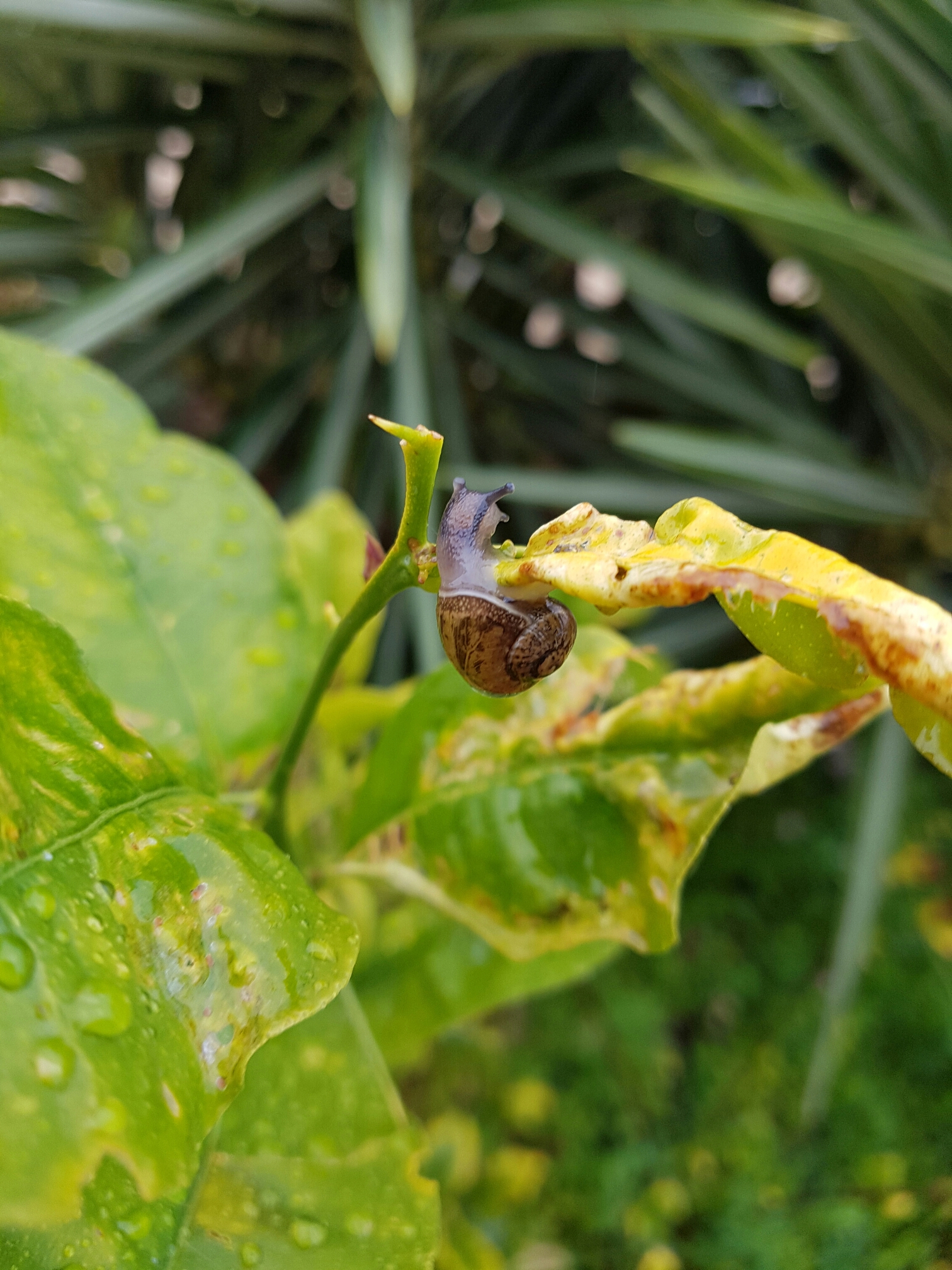
Then there is relief from the pain, like being dipped into a warm marshmallow. The metaphor is bizarre but enters consciousness at about this time. I walk outside, unsteady (so this is what it must feel like to be old) and slowly take up residence on a patio chair. Descend into it with ridiculous deliberation. Now I feel the warm sun on my skin, feel like a fatigued lizard. But I am strangely grateful that I can move my toes with ease, feel the grains of sand from an antheap beneath my foot, see a snail navigate the teeth of an aloe leaf, hear a magpie lark and feel its melody in my heart. Is this me or the effects of the pain killers? I make a silent promise to myself that henceforth I shall first be grateful I am alive before I worry or entertain regrets. Pain can teach, there are lessons even though we desire less of it.

wp-1484377402857.jpg

 The resistance movement


20161004_164935.jpg

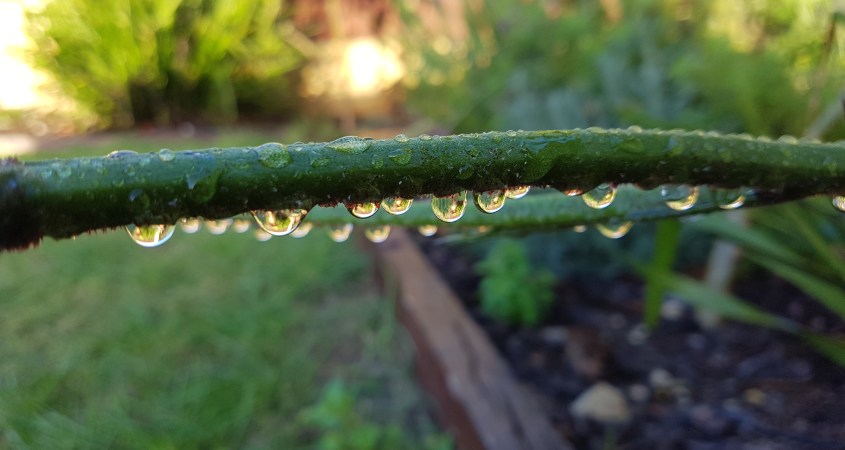
I plant flowers in September  that will be dead by March . They die, I remove them, clear the beds and plant new ones. I water the plants daily that I have placed into the ground. The late afternoons of summer are cool when the Fremantle Doctor blows. Then he catches the spray from the hose and blows it back into my face. I will often water the higher leaves of the trees and sit and listen to the drops tap the flat leaves of the Agapanthas. The white Petunias grow rapidly, wild almost after I feed them epsom salts diluted with water and SeasoL. The smaller violets have spread in all directions. I’m finding them between the pavers. They are creating their own story here, going their own way. Their colour and beauty are pleasant but they never last. Those I thought were strong have died and the dogs regularly pee on one plant in particular. It has at last surrendered and died. There is a constantly flattened patch of Violets that the cat has claimed as her own. I feel frustrated at their lack of consideration for my efforts to create beauty in this reclaimed seaside desert. They shit and sleep on the fruits of my labour. As I attempt to bend nature to my will, they express their nature effortlessly. Toilet and rest, the common denominators. Effort is perhaps contrary to my nature? But I persist, season after season because that is what one does. I recall somewhere a garden of remembrance where the ashes of the dead are cast out, where the living go to remember them among flowers. We are like flowers and this is a garden of persistence. A resistance movement.  Really it is a war. I plant, I water, weeds reappear, the sun sucks the plants dry, they die. Those that survive die when winter arrives. By June few have survived. I forget the garden in winter, I bend to nature.  In late August the war continues.

wpid-dsc_0589.jpg

Officio Rex


They navigate us,
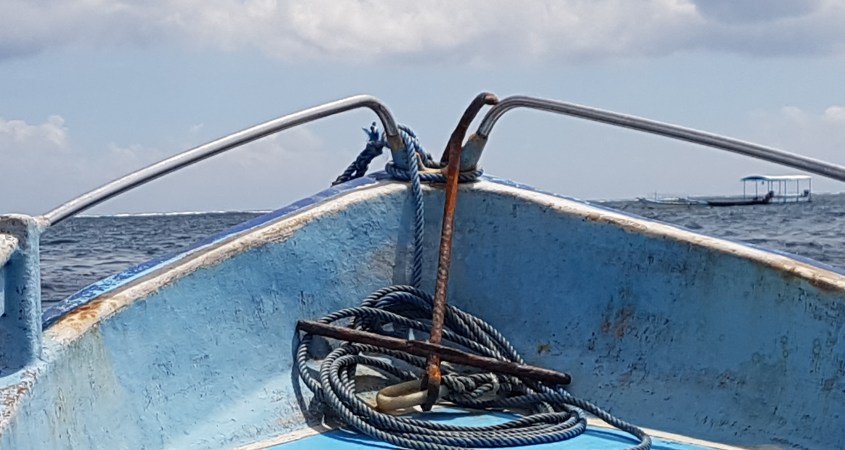
Boats at sea
from windowless offices:
•river views with underground parking.
•3rd storey (higher purpose).
•air conditioned at 21°C (stable).

Creating circulars to circumnavigate the bold.
Contextualizing the world (one circular at a time).
Reviewing them that create it.
Coordinating the rules that govern them.
Grading and paying them.
Your opinion is
important to them.

The certainty of being

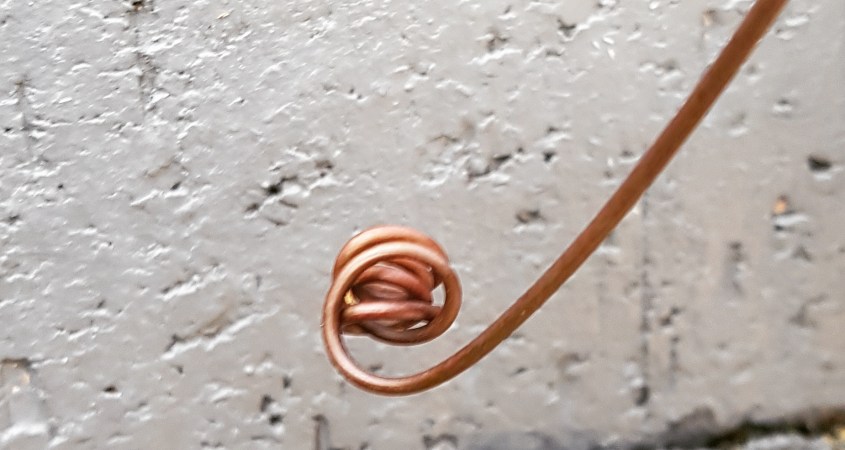
The tendril forces itself out from the stem. Its unyielding fisted coil will conquer this wall. It will push against anything that comes between itself and the next moment. I am in awe of  its unbending vigour. This is certainty of being. Some people seem to have it too.

A trellis has been sunk into the soil to guide it. Thin bamboo sticks held together with bits of wire. But the plant, done with guidance and the polite shootings of its youth, grows prolifically. Nothing will stop it. If this plant has consciousnessness, I wish I could hear its thoughts and learn from it. How does something proceed with such certainty from itself? Is there a voice in nature I have not yet heard? Am I not a part of nature. I am a being in nature? Is this nature, this suburban garden. I wish my nature were more certain of itself, like this sap gorged tendril rigidly, gently finding the crevices it will fill and claim. What precedes being?

If you repeat the word “certainty” over and over again, holding it in your mind with the hope that the repetition locks onto a deeper sense of its meaning, the word begins to feel and sound strange on the tongue. It then sounds more like a self contained sneeze than a sign pointing to self-assurance. It is like this with most words, these utterances we load with meaning and where variously positioned and stressed, mean different things.

We are flesh that has found words. Like the plant creeping across the trellis, we wind our thoughts around moments and push on. We are not certain of where we’re going , only that we go.

a chaos theory

Considering the violence of the cosmos and the catostrophic soup from which we have crawled, we ought not to be alive. Yet here we are, skimming the edge of disaster at 110 000 kph. We are close to nothing, dodging asteroids while trapped in the orbit of a nuclear fusion factory (over 6 billion nuclear explosions every second) we affectionately refer to as the Sun. In physics chaos refers to the unpredictability of a complex system. In everyday life it describes disorder, confusion or turmoil. It is the air we breathe and we are better at dealing with it than we think. It’s just a pity we only trust politicians to guide us through it. We need to take back that responsibility.

Humans have survived against all odds and instead of embracing life, the singular substantial commonality, we seem intent on obliterating one another and the planet that has nurtured us. If we don’t survive the next 100 years we don’t deserve to be here. The experiment of life on this planet will have failed. Disaster and promise, like cosmic exhalation and inhalation are present every moment. There is enough of either for everyone, more than enough. The universe is big. Earth on the other hand is relatively small. A lovely little sphere run through with faultlines that give texture to its surface. The most destuctive flaws on the planet are not the natural ones but the man made ones evident primarily in the way we conduct politics. If we do not learn to stop giving power to fools then we must suffer the consequences. You have a greater chance of encountering death by falling out of bed or off a chair than being shot by a terrorist. Fear appears to have become the politicians best friend.

If we are fortunate and we have the luxury of peace and relative normality away from the condition of being bombed, then we are obliged to nurture hope. One way of doing this is through self education. Ignorance is not an option any more, it is no excuse. We owe it to ourselves to discover our own hope, not the brand any one else offers us.

Something remarkable happens when people are backed into a corner. I reckon humanity will surprise us yet.

20160927_133258.jpg

The philosophy of stairs

Stairs simplify ascent. The added advantage is that for the same cost they are equally efficient in two directions. They may induce awe, vertigo or at least comfortable indifference. Conversely steps to the hangman’s noose must surely magnify the physicality of the body for the soon-to-be released soul.

Stairs symbolize mankind’s urge for perfection and simultaneously our capacity for ruinous arrogance. If they are well crafted they can raise our spirits as they do our feet. Large flights of stairs demand rigorous geometry and if they are required to be beautiful then craftsmanship is, rightly so, expensive. Aesthetics are never a certainty, but the human desire for beauty is. Inevitably the most functional of items become adorned. Art has its origins in making practical things pretty.

In the Judeo-Christian tradition stairs are periodically mentioned. Jacob climbed stairs in a dream to get closer to God (laboring the uneven steps of the Great Wall of China I felt uncomfortably close to God) and an ancient king built a tower in Babel to reach heaven. Up is the direction of eternal bliss, down is where we go to find disgrace, hell or, if you are lucky, the wine cellar. Popular culture has its fair share of stairs, from M.C. Escher’s disorientated constructions to Led Zeppelin. Rapunzel let down her hair to be climbed; Cinderella lost her glass slipper running down stairs, both Julius Caesar and Archduke Franz Ferdinand were assassinated on steps. Stairs have no emotional attachment to either up or down but ease our path in both directions. They are good that way, utterly indifferent to the whims of man. Many of the finest are still there centuries after the best and worst of us have stepped aside.

Here are some stairs I have known:

20160728_170503.jpg

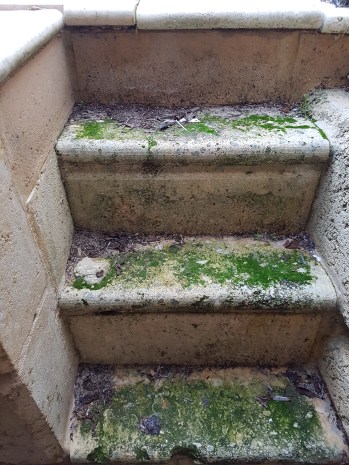
Moss covered limestone stairs. Limestone is abundant in Western Australia and it is used everywhere. There is something in their earthy tones and roughness that comforts me. They are solid and will probably outlive me. Stairs speak to us through the people who cut and laid them. Here, the stonemason, with his great blocks transcends a potential abyss.

20160625_091108.jpg

The stairway leading up to the Paper Mountain Studio in Northbridge, Perth. Built c.1930’s it retains the period’s devotion to geometry. As I ascend to the block of light above me I register a metaphysical ideal and the physical act of climbing reminds me that I am consciousness inside a body.

P1050118

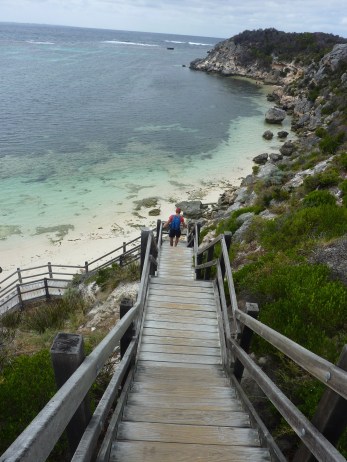
Stairs down to the beach, common along the coast of WA. One begins the descent with one’s eyes fixed on the horizon, drawn away from oneself. The steep plane of descent makes one believe afresh in the old dream of human flight. It feels possible here if one only has the faith to leap forward. The wood creaks and in a few seasons it may need some treatment or repair. These stairs are like us. They weather quickly but are stronger than they appear to be.

20160730_164909.jpg

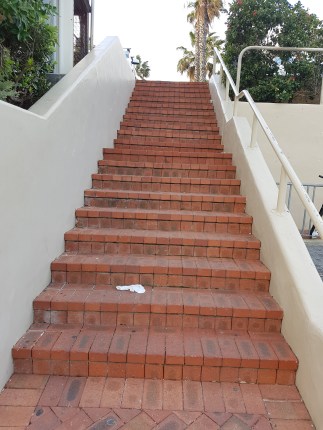
The humble brick reminds me of the far-reaching influence of Roman culture. It was not the army that built the Roman Empire but their architects. Even where the Romans did not go, they are there. There is an earthy warmth to brick, it is baked clay. Brick is the texture of my youth, it is working class and honest.

These stairs are like a mathematical formula; they are a universal truth trudged daily around the world in schools, hospitals, municipal structures and other high density areas. The design language of basic infrastructure is austere. They are ugly. The kind that dictators like – devoid of emotion, dehumanising. They are made to work for a long time and are indifferent to the human need for beauty. Their designers had to meet budget. When design preferences utility over people, this is the result. They are the existentialists of architecture since they induce a sense of isolation and meaninglessness. All we can do is climb them to discover our own truth.

DSC_0444

The last few steps I maneuvered my mother up in the picturesque town of Wakkerstroom. Some steps we would love to climb again. Certain structures have such immense gravitas that they become points of return. We do not simply inhabit buildings and walk stairs, when there is significant emotional weight in the living and walking, we establish pilgrimage routes. That is how we finally feel we belong to a place. When after we are dead, we know the people we love will continue to walk there.

The best thing about stairs is that they help us without expecting anything in return. They do not try to sell me anything or convert me, they don’t want my vote, they just want to be used. People should be more like stairs. Maybe they already are; they pick me up and they show me the way out. I’m going to be like a pilgrim and move on …

Main photograph of stairs in Paris by Hannah Scallan

When I have fears

When I have fears of old age, death and the rise of the ‘right’ I have a slow espresso in the garden and say to myself “not yet, not today”. Then I slip into the denial that has served me well in my life so far – that I am immortal. Not immortal in the living forever sense but in the sense that right now is forever and I’m here … 


Living the dream

“Livin the dream man” he says and because he knows he’s on radio I suspect he’s dragging his words out slowly to sound like a stoned surfer living in a van with his pet kelpie. He sounds blissfully ignorant, or maybe just indifferent to the strife that is weathering so much of the free world. Like Bacchus on Olympus he couldn’t give a flying fig for the bounds of reality  that bind mundane mortals like myself. What he’s really saying is “I chose a lifestyle that is better than yours.” How how I hate smug, happy and insanely content human beings. How dare they slip off the treadmill, follow their dreams and then rub our noses in it! I’m more frustrated at how in a moment he is undoing years of hard work trying to convince my 16 year old son to study hard, work hard, get a job and take his place beside all of the lobotomised men of his undistinguished family. Generations of us have been suffering like Sisyphus, casting aside the call for adventure to shuffle as slowly as we can from our mortal coils while wrapped up in our linen sacrcophagi, ready to buried, already dead. I’m shocked at how easy he makes happy sound, bastard!

So tell us mate, how are you living the dream? The disc jockey asks smiling (you can hear when people smile).

You’s guys are all stressed out about work and money and rushing here and there an i don’t have that man. Surfer dude says. I don’t got much but i got a lot, you know he continues. Oh someone please shoot him now. I switch off the radio.

I turn left instead of right at a critical juncture on my way to work. I stop and buy a ‘long mach, topped up’ and walk down to the beach where I sit for 10 minutes with a stupid grin on my face. Thanks surfer dude!

dsc_0591_5.jpg


Life on the edge

I live on the edge here in suburbia. That’s where the action is, the danger – my happy place. Courage under fire is my espresso. We feel most alive when the prospect of death is real. My adrenalin rush this time? I’m choosing a paint colour for our bathroom. I know what you’re thinking, that’s not life threatening. No ,it’s not, except I also intend to apply said paint to said walls … as a surprise, without telling my wife. Now that, my friends, is what I call going where the proverbial angels fear to tread.

About twenty years ago I painted our kitchen yellow. That was a surprise too. It was bright sunflower yellow and I remember this because it was during my ‘impressionist’ period when I was discovering Van Gogh. It never had the desired effect. I was going for delight and would have settled for a smile, I was not prepared for horror. Hence the twenty year hiatus in home decor. And that, ladies and gentlemen, is how suburbia channels the spontaneity gene-carefully, one to-do list at a time. Until you wake up one day and realise that you put down the toilet seat without being asked, boldly declare your intentions (once you have permission) and the weekly shopping has become an outing. You know the price of bread, when potatoes are on special and start buying low fat milk and walking the dog to combat cholesterol. You’re mortal after all, reliably so. Playing it safe may have contributed to the quantity of years but not their quality, there is only so much time left and you’re half way dead already so to hell with it, let’s be reckless … let’s paint another room! Tempus bloody Ra!

You’re probably worried. Don’t be too concerned, I’ve thought it through long and hard. The idea actually came to me this morning as I unintentionally placed an extra hole in the bathroom wall (they are ridiculously thin) whilst fitting new towel hanging devices. Selleys No More Cracks or Dents tends to stand out against a wall that is not white. For the moment a towel covers the spontaneous cavity but it’s bound to be moved soon, it’s inevitable I’m afraid. I thought of doing something ‘Banksy’ like sticking a frame around the damaged plaster and writing in elegant graffiti ‘where was this hole before it was here?’ But that’s so twentieth century and I am trying to stay relevant. So, instead I’m contemplating white or a neutral stony colour – this may in fact help me to define what period I’m going through at the moment. (Note to self: avoid beige). Maybe it won’t be noticed? Do I go full suburban and aim for blending in? This is going to be harder than I thought. I must not induce an existential crisis. It’s only a paint job. It’s never just a paint job. It’s not the Sistine Chapel but it’s never just another paint job. This is bigger than you and I, it’s … snatching back my dignity and then running like hell before I get caught!

Wish me well. As General McArthur said, “I shall return”. Mind you, Scott of the Antarctic said “I’m going out, I may be a while” and look at what happened to him. And he was only sight seeing, nothing as dangerous as surprising his wife with unauthorised decor. Watch this space.

This beautful Renaissance work by Artemisia Gentileschi has always been a favourite of mine. I must stress the historical context presents as symbolic and not prescriptive.


I learn, therefore I doubt.

Until I spoke to Ganesh, I thought I understood what learning was. I met Ganesh in 2003 in Mumbai. He was a blind in one eye street kid. He spoke some English, we talked a bit about his life, where we came from, the weather, the usual stuff. He showed us around for a while and we came to a local supermarket somewhere off the Colaba Causeway. To thank him for his help I bought him rice that came in a white linen bag with carry handles. He was grateful, so were we.

wp-1465307046503.jpg

He had attended school but now needed to help his mother care for his siblings. He said he could read so I told him to read as much as he could, more, as much as possible. In the Cafe Leopold I sensed the absurdity of such contrived advice to an 11 year old boy whose priority was survival. How uselessly abstract in this world of poverty, and I called myself a teacher? For days after, for years beyond that I felt I had ridiculed my own faith in literature. I began to doubt the power of books to change anything. Change is either loose coins in your pocket or an ideology. Reading had expanded my world, made it bigger. I had the luxury of imagining possibilities beyond my circumstances. Later studies in literature affirmed my devotion to writing but taught me to respect words the way you respect the sea for fear of it drowning you.
My time in Mumbai reminded me that Art, like God, is a personal thing. One’s own journey through either is not a template for humanity. Ganesh shone a light on my doubt. It has remained illuminated. I’ve learned to live with my ignorance. Maybe I don’t really teach. Sometimes it feels more like I’m assembling data as determined by policy makers who are in turn determined by elected officials whose priorities are in turn determined by elections. I feed a gargantuan social mechanism whose primary function is consuming basically functional, highly maleable cogs. I myself am also a cog.

So I don’t know much about learning. Twenty five years of teaching doesn’t build a skill set, it elevates ignorance to a more sophisticated level. It has enabled me to recognise the academic pretence of “experts” and see the greatest obstacle to learning is that their rhetoric has become the language of education. Teaching has become the craft of bureacratic window dressing, of marching young minds painstakingly through the ever narrowing arch of the final examinations. Years of ‘rigorous’ assessment press fresh minds into stale social moulds.

The term education is derived from the Latin word ‘educere‘ which means ‘to draw out’ or ‘to bring from’. Learning should not be about placing knowledge into people, that is what propaganda and politicians try to do. Besides, what is knowledge? Something to talk about another time perhaps? Education, in the real sense of the word, works from the inside out. Teachers ought to ignite within students the desire to know more about themselves and their world in order that they might extract from within themselves the means for living a meaningful life. In this respect I believe that teaching is a noble profession for what it professes to do-draw out of young people the best they have. Teaching, therefore, doesn’t pass knowledge on, it shows us where to look and where we start is where we end, with ourselves.

I believe schools are inherently places where learning is desired. I suspect it happens despite teachers or curriculum. It is possible that what we learn is simply what we need to know to survive life. And survival is what all of us do. Some do it in style in expensive mansions, some in surburbia and others in shanty towns or on the streets. I believe wisdom is what we learn about being alive and education is the commodity we purchase to make living comfortable. In the interim, between the wisdom and the knowledge, there is something far more important, love. Despite the trudgery and sadness of this flash of existence, we have to keep an open heart.

wp-1465307139655.jpg

I photographed this lady as we passed a beach close to a small community near the Sassoon Docks in Mumbai.

wp-1465307114958.jpg

I never saw her face and would not have photographed her if she were facing me. She walked to the edge of the beach with graceful dignity as waves crashed into shacks lodged precariously on the side of an embankment. She fixed her gaze on the horizon and did not look back for a long while.

Featured image: A washer takes a break in Dhobi Ghat, a huge open air landrey where the linen from the best hotels in the city are sent for cleaning and pressing.